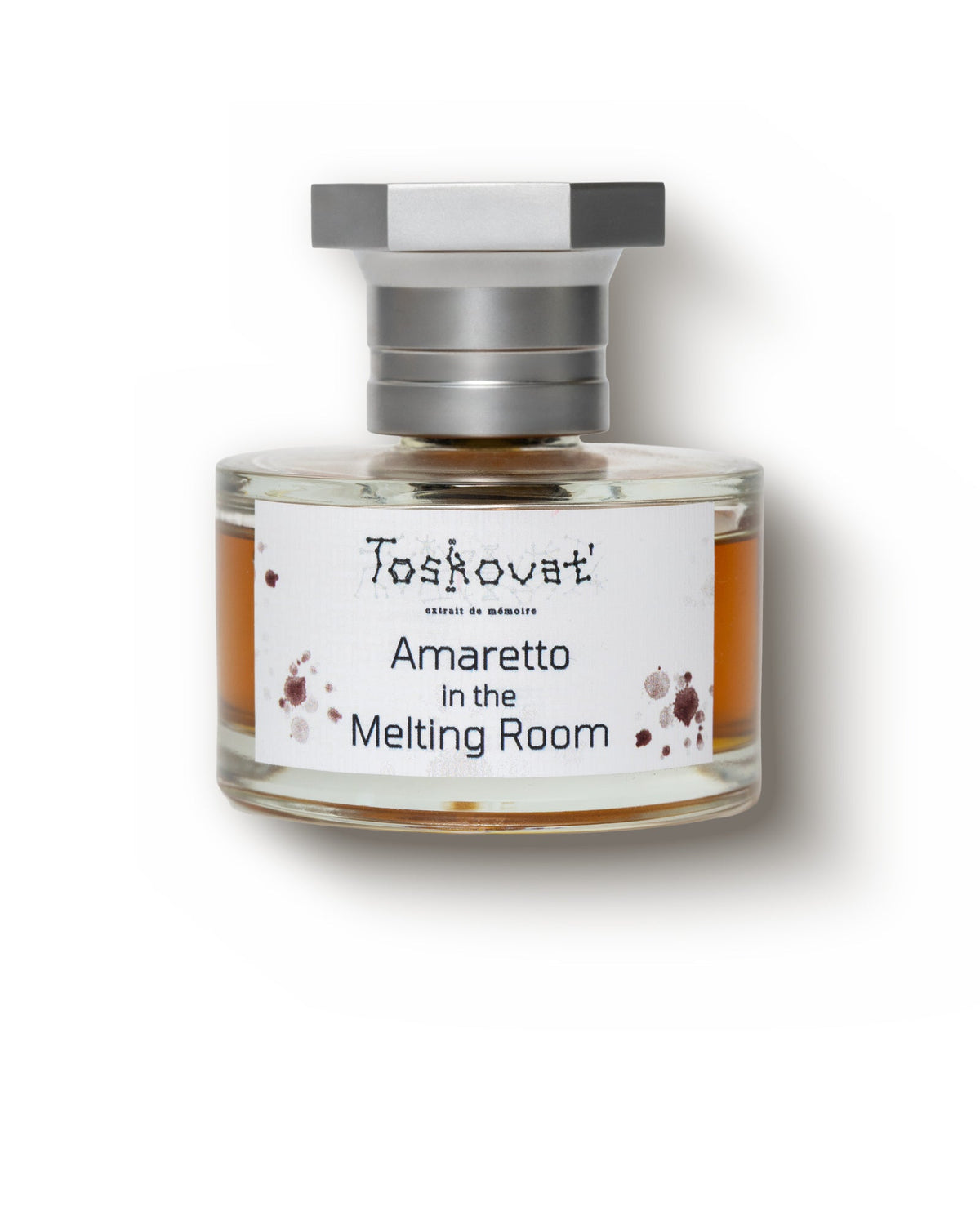
Toskovat
Amaretto in the Melting Room
The Story
Amaretto in the Melting Room is the first of Toskovat's Betrayal Collection, a 2025 perfume by David-Lev Jipa-Slivinschi about friends invited to the table and into the home whose eyes were on fool's gold all along. He turned that memory into something good: amaretto, sacramental bread, candle wax and honeycomb.


Almond
sweet marzipan and bitter pit
A sweet, nutty warmth like marzipan and amaretto, edged with the cool bitterness of the cracked pit. It is dessert and warning at once: comforting on the surface, with an almost cherry-stone sharpness running underneath that keeps it from ever going soft.


Sweet
Warm sugar you cannot quite name
Caramel, honey, spun sugar: sweetness that hovers between all three and never settles on one. This is the gourmand pull, the thing that makes someone lean in closer than they meant to, warm and soft and a half step short of edible.


Honey
golden sweetness with animal warmth
A thick, waxy sweetness with a faintly animalic, almost leathery undertone beneath the nectar. It hums warm and skin-close, comb-fresh florals on top and something darker and stickier underneath, closer to the hive itself than to anything poured from a jar.


Vanilla
Cured pod, boozy under the cream
Cured pods, not frosting. The sweetness here is custardy and balsamic, with something dark and boozy under it, closer to rum and woodsmoke than to sugar. It warms everything above it, blunting sharp edges and slowing the whole thing down.


Fruity
Peach skin, not lemon peel
Peach, pear, apple, berry: this is sweetness in the flesh rather than the rind, dewy and nectar-heavy where citrus is sharp and thin. It plays young and slightly greedy, the sort of ripeness you can almost feel running down a wrist.


Balsamic
Tree sap gone thick and golden
Tree resins and golden amber, thickened to syrup and touched with vanilla. It does not sparkle or move; it settles, warming the skin the way candlelight warms a room, and it stays there long after the top notes have gone quiet.


Tobacco
dried leaf, honey and smoke
Dried, golden leaves steeped in honey, hay, and a whisper of smoke, sweet and faintly fermented like an open pipe tin. It feels masculine and lived-in, warm and contemplative: a room somebody smoked in for years.


Orange Peel
Sun in the rind, bright and bittersweet
What it is
Squeeze a fresh peel and the mist that flies off it is the perfume material, pressed cold from the rind rather than distilled. Bitter orange is a separate tree, its blossom giving neroli and its leaves petitgrain.
How it smells
Sweet pulp over a rind that bites back. It opens sparkling, sunlit and briefly tart, then rounds off into something candied. Next to lemon it is warmer and softer, less a knife than a glass of juice.
In perfumery
Nearly always a top note: the burst is bright and gone within the hour. It works with neroli, bergamot, clove and warm spice, and carries Atelier Cologne Orange Sanguine and the whole eau de cologne tradition.
Good to know
Cold-pressed sweet orange peel carries almost none of the molecules behind citrus photosensitivity, so it is not treated as phototoxic the way bergamot, lime and bitter orange are. It is volatile, though, and oxidizes fast: brilliant, brief.


Peach Stone
Bitter kernel sealed inside a furrowed peach pit
What it is
The hard, furrowed pit of a peach hides a seed, the kernel. Like apricot kernels, it holds amygdalin, which the plant's own enzymes split into benzaldehyde and hydrogen cyanide when the kernel is crushed or chewed. Raw kernels are poisonous.
How it smells
Sharper and drier than the fruit. A bitter marzipan edge comes first, then a cherry-pit snap, then a nutty, faintly woody dryness, like a cracked stone with a little of the peach's sweetness still clinging to it.
In perfumery
Peach kernel oil is pressed for skincare and listed as not for fragrance use, so the note is built. Benzaldehyde, nearly all of it synthetic today, supplies the pit's bitterness, the role it plays against lactones in peach accords.
Good to know
Noyau is French for pit or kernel. Crème de noyaux is flavoured with peach, apricot or cherry kernels, and amaretto can be made from peach stones. The perfume note carries none of the cyanide that makes raw kernels dangerous.


Sacramental Bread
Dry, papery wafer of flour and water
What it is
Latin-rite altar bread is wheat flour and water, nothing else, not even yeast. The batter bakes between two heated plates that work much like a waffle iron, then the thin sheets are dampened and cut into rounds.
How it smells
Barely there, and that is the character: dry, papery and starchy, like the inside of a cracker with the salt taken away. A faint toasted edge, a cool flour dust, almost no sweetness at all.
In perfumery
Perfumers suggest it rather than copy it, borrowing from rice accords: powdery lactones and musks for pale starch, traces of maltol or furfural for grain. Here it sits in the opening beside orange peel and peach stone.
Good to know
The wheat is not negotiable. A 2017 Vatican letter restated that completely gluten-free hosts are invalid matter for the Eucharist. Low-gluten hosts are valid, provided they keep enough gluten to make bread without added foreign materials.


Amaretto
Bitter almond warmed in Italian liqueur
What it is
Named for the liqueur, not distilled from anything. Real amaretto gets its almond from apricot kernels and bitter almonds; the perfumery version is rebuilt around benzaldehyde, the marzipan molecule, with vanilla and a boozy warmth around it.
How it smells
Marzipan first, with a cherry-stone bitterness under it and a syrupy alcoholic lift. Think amaretti biscuits, still warm. It settles creamy and vanillic, sweet but never quite innocent about it.
In perfumery
Its job is to keep sugar from getting boring. A bitter, adult edge over cherry, vanilla, tonka and tobacco, it sits in the heart and base of boozy black-cherry gourmands and the cherry-amaretto blends that follow them.
Good to know
Benzaldehyde is the reason almond and cherry smell like relatives. It is the scent of marzipan and of stone-fruit pits, and in nature it sits beside trace cyanide compounds, which is why bitter-almond extract is tightly regulated.


Sugar Syrup Foam
The sugared white head on a shaken sour
What it is
A fantasy note with nothing to distil. Listed beside Amaretto, it reads as the pale head on an amaretto sour: egg white, lemon and syrup shaken hard, first without ice, until the proteins trap air. Sucrose itself is odourless.
How it smells
Sweet but weightless, a sugary froth rather than a syrup: caramel-like and faintly jammy, held up by a cool, bright shimmer. Underneath sits a soft, milky creaminess with a hint of coconut, lighter and less baked than meringue.
In perfumery
A perfumer would reach for ethyl maltol, all cotton candy and jammy strawberry, at well under one percent of the concentrate. Aldehydes, the sparkle in Chanel No. 5, add the lift, and a creamy lactone such as delta-decalactone gives body.
Good to know
Raw egg white gives a sour's foam a faint smell bartenders liken to a damp dog's coat; one fix is a few drops of bitters on top. Aquafaba, the cloudy liquid in canned chickpeas, whips into a similar foam.


Labdanum
Sticky amber resin scraped from sun-baked rockrose
What it is
A Mediterranean rockrose sweats gum through its leaves in summer, dark and sticky enough to glue your fingers together. Harvesters boil or scrape the branches to get it off, then extract that crude gum into absolute and resinoid.
How it smells
Balsamic warmth, then leather, dried fruit, honey and a curl of smoke. There is something almost ambergris-like in the opening. Hours later it has settled into brown tobacco and worn skin, still going.
In perfumery
Take labdanum out and most amber accords collapse; it is what vanilla and benzoin get built on. It fixes a formula in place, gives chypres and leathers their depth, and sits well with rose, oakmoss and incense.
Good to know
Before there was distillation, there were goats. Herds browsed through cistus scrub all summer, the gum matted into their beards and thighs, and shepherds combed it out. Labdanum is one of the oldest aromatic materials still in use.


Candle Wax
Warm beeswax tapers and a quiet flame
What it is
Start with the room, not the raw material: wax, warm air, a wick just gone out. Beeswax absolute gives the body, with smoky and paraffin-cool facets over the top to put the flame in.
How it smells
Soft and honeyed at first, the way a warm taper smells before you light it. Then the cooler part arrives: clean wax, a thread of smoke, that faint burnt-cotton smell a wick leaves behind. Powdery, quiet, never sharp.
In perfumery
Perfumers use it low down, where it slows a volatile floral and leaves a golden hum. L'Artisan Parfumeur's Seville a l'Aube melts it under orange blossom and tobacco: the clearest lesson in what wax does to a flower.
Good to know
Most candles today are paraffin or soy and smell of almost nothing until the flame is out. Beeswax is the exception, and one of the few animal-warm materials in perfumery that costs the animal nothing.


Vanilla Powder
Cured orchid pods, custard and faint smoke
What it is
Green pods come off the orchid vine smelling of almost nothing. The scent is made, not found: months of blanching, sweating in the sun and slow drying before the vanillin appears. Mexico first, Madagascar now.
How it smells
Custard and caramel up front, then something darker underneath: dried fruit and a thread of tobacco smoke. It turns powdery as it dries and sits close to the skin. Real cured vanilla reads deeper than vanillin alone.
In perfumery
Perfumers use it to round off edges. Anything too sharp, too green, too austere gets warmth and body from a vanilla base, which is why it anchors many oriental and gourmand builds alongside tonka, amber, sandalwood and spice.
Good to know
Every flower opens for one day. Miss it and there is no pod, so all of it is pollinated by hand, a trick devised by Edmond Albius, a twelve-year-old enslaved boy on Réunion. Most vanilla flavour today is synthetic.


Passionflower
Green crushed stem under a crown of filaments
What it is
Passiflora is a genus of about 550 species, mostly tendril-bearing vines largely from tropical America. The blossoms differ widely in scent: one species smells of rose, citrus and honey, another of ylang and anise, another of almost nothing.
How it smells
As a perfume note it reads green and watery first: crushed stems, wet leaves, a cool, almost metallic edge. A soft, translucent floral follows, lightly tropical, neither sweet nor sharp, and nothing like the sulfurous tang of the fruit.
In perfumery
The blossom is not commercially extracted for perfumery, so the note is a fantasy accord: green-leaf materials such as cis-3-hexenol, a trace of galbanum, watery floral notes and light metallic touches. It suits garden-themed and aquatic compositions, often in the heart.
Good to know
Spanish missionaries in the Americas read the Passion of Christ into the flower: the filament ring as the crown of thorns, the three stigmas as nails, the five anthers as wounds. Passion here is Latin passio, suffering, not desire.


Tonka Beans
Warm almond-vanilla sweetness with a hay-tobacco shadow
What it is
Shelled seeds from a South American legume tree go into alcohol, then dry for weeks until coumarin crystallizes across their skins like frost. That frosted bean is what becomes the absolute perfumers use.
How it smells
Vanilla and bitter almond first, then hay, dried tobacco and something toasted. The opening is close to caramelized custard; the drydown goes powdery and boozy, with cinnamon and cut clover in it. Hazier than vanilla, softer than almond.
In perfumery
Between heart and base, it sweetens without turning sharp. Lavender, amber and tobacco all take to it. Coumarin, first pulled out of this seed, built the fougère family, though the 1882 original ran on the synthetic version.
Good to know
Tonka owes most of its scent to coumarin, which American food regulators banned in 1954 after high doses damaged the livers of lab animals. The bean is effectively illegal in a US kitchen and perfectly legal on skin.


Tobacco Absolute
Dried leaf curing into honey and hay
What it is
Nothing is burning. The leaf is cured and fermented first, then solvent-extracted into a dark, sticky absolute, and what comes out smells of hay and honey rather than of an ashtray.
How it smells
Warm, dry, sweet: cured hay and pipe tobacco with honey, dried fruit and a trace of cocoa behind it. A green, leathery bite at the start softens into something ambery and balsamic, sometimes with a powdery floral edge.
In perfumery
It sits from the heart down, where vanilla, tonka, honey and leather all cling to it. Give it vanilla and you get the sweet, edible kind; give it leather and spice and you get the dark, dry kind.
Good to know
A living tobacco plant smells sharp and green. Everything sweet in the absolute is made during curing and fermentation. Authentic absolute is costly and restricted in some markets, so many tobacco notes are rebuilt from coumarin and hay.


Honeycomb
Beeswax and dried fruit turning faintly feral
What it is
Bees concentrate flower nectar into a syrup that smells of whatever they foraged. Raw honey resists clean extraction, so the note in a bottle is nearly always built from beeswax absolute and aroma chemicals.
How it smells
Thick and golden, sticky with dried fruit and warm wax, and never quite polite. Under the sweetness runs something animal, closer to skin than to a jar. Push the dose and it turns leathery.
In perfumery
A heart-to-base warmth that rounds tobacco, orange blossom, immortelle and leather, softening their edges while smuggling in body heat. Orientals use it to make sweetness feel lived-in rather than confected.
Good to know
Most of that feral edge is one molecule, phenylacetic acid, which smells of honey and stale sweat at once and edges toward civet. Overdose it and the perfume goes barnyard, so perfumers weigh it in fractions.
Fragrance Character
Orange peel and peach stone open bright and faintly bitter over the warmth of sacramental bread. The amaretto follows, almond liqueur thickened with sugar syrup foam, while labdanum and candle wax give it resin and wax underneath. The drydown is powdery and soft: vanilla powder, tonka beans and honeycomb around a thread of tobacco absolute, passionflower in the background.


Longevity
how long it stays on skin
The hourglass reads wear time: how many hours the fragrance keeps speaking before it fades. A bar that barely leaves the start means a few fleeting hours. One that runs the full length carries from morning into evening. Treat it as typical, not promised. Oily skin holds scent far longer than dry.


Sillage
the size of its scent trail
Sillage is French for a ship's wake, and that is exactly what this measures: how much of the scent reaches the room instead of staying on you. Low is a whisper only close friends catch. Enormous fills the room, then keeps filling it after you leave.


Experimental
Built to provoke, not to please
Some perfumes are made to be liked. These are made to be argued about: inky tar, hot rubber, fruit on the turn, metal and fur where you expected flowers. The coin glows for a scent that provokes and dims for one that plays it safe, which is sometimes the point.


Office
Polished, and never louder than the room
Scent is manners in a shared room. At this range it should reach the person across the desk and stop there: tidy citrus, soft musk, pale woods, all of it reading competent and considerate. A glowing coin means nobody has to mention it. A dim one means it travels.


Evening
After dark, when it deepens
Dinner, drinks, the night that runs long. Low light is where ambers, resins and smoky woods stop being polite, and where a plush floral finally blooms. A glowing coin means it is waiting for exactly this hour. A dim one means it did its best work in daylight.


Romantic
Close enough to be felt
A fragrance can hum against skin instead of announcing itself across a table. That is the register here: creamy florals, vanilla, soft musk, a thread of spice, warm enough to make someone lean in. The coin glows when a scent sets that mood and dims when it is more practical than seductive.


Formal
Quiet authority in a dressed-up room
A wedding, a ceremony, a room where everyone has thought about their shoes. What works here is structure, not volume: smooth woods, disciplined florals, soft leather. A glowing coin means it holds its posture all evening. A dim one means it is too casual for the room.


Casual
Easy comfort for unhurried days
Errands, coffee, a slow Saturday with nowhere to be. Nothing here has to impress anyone, so the fit is soft and easy: fresh citrus, light woods, a little warmth off the skin. A glowing coin says yes to all that. A dim one means the fragrance is asking for a bigger night.


Day to Night
where its mood naturally falls
A bar running from sun to moon, reading the hour the fragrance was made for. The more of it that stays gold, the more the scent belongs to daylight and open air. The further the blue reaches back toward the sun, the deeper and warmer it turns: evening, candlelight, low rooms.


Winter
Warmth that carries through cold air
Cold air mutes a fragrance and slows it down, which is why winter belongs to the dense and the warm: resin, smoke, vanilla, leather, ambered spice. The bar reads how well this one pushes back, glowing against the chill instead of thinning out in it.


Spring
Fresh blooms in mild, rising warmth
Mild, humid air lifts a light composition, so the season belongs to dewy florals, green stems, soft powder and citrus you can see through. Alive rather than heavy. The further the green runs along the bar, the more comfortably this one wears in that weather.


Summer
Bright and airy in real heat
Heat does the projecting for you, which is why the wrong perfume turns unbearable by noon. What survives is cool and breathable: sharp citrus, salt air, aromatic herbs, water. Things that refresh instead of cloy. A short bar here means save it for cooler months.


Fall
Spiced warmth for cooling days
As the air cools, the rich materials stop smothering and start reading clearly: dry woods, warm spice, tobacco, amber, fruit gone golden. It is the season perfume turns contemplative. The bar fills according to how naturally this one settles into crisp, cooling days.
Best Worn
Cold autumn and winter evenings, a long dinner or a late drink somewhere warm, on anyone who likes a gourmand with a bitter almond edge, and wax and tobacco under the sugar.
选择选项
氛围


调香师

David-Lev Jipa-Slivinschi
创始人兼调香师
常驻布加勒斯特的罗马尼亚人,自电影创作转入调香,2022年创立 Toskovat'。他创作了 Toskovat' Inexcusable Evil、Toskovat' Age of Innocence、Toskovat' Anarchist A_、Toskovat' In the Belly of the Beast 与 Adi ale Van Gethsemane。
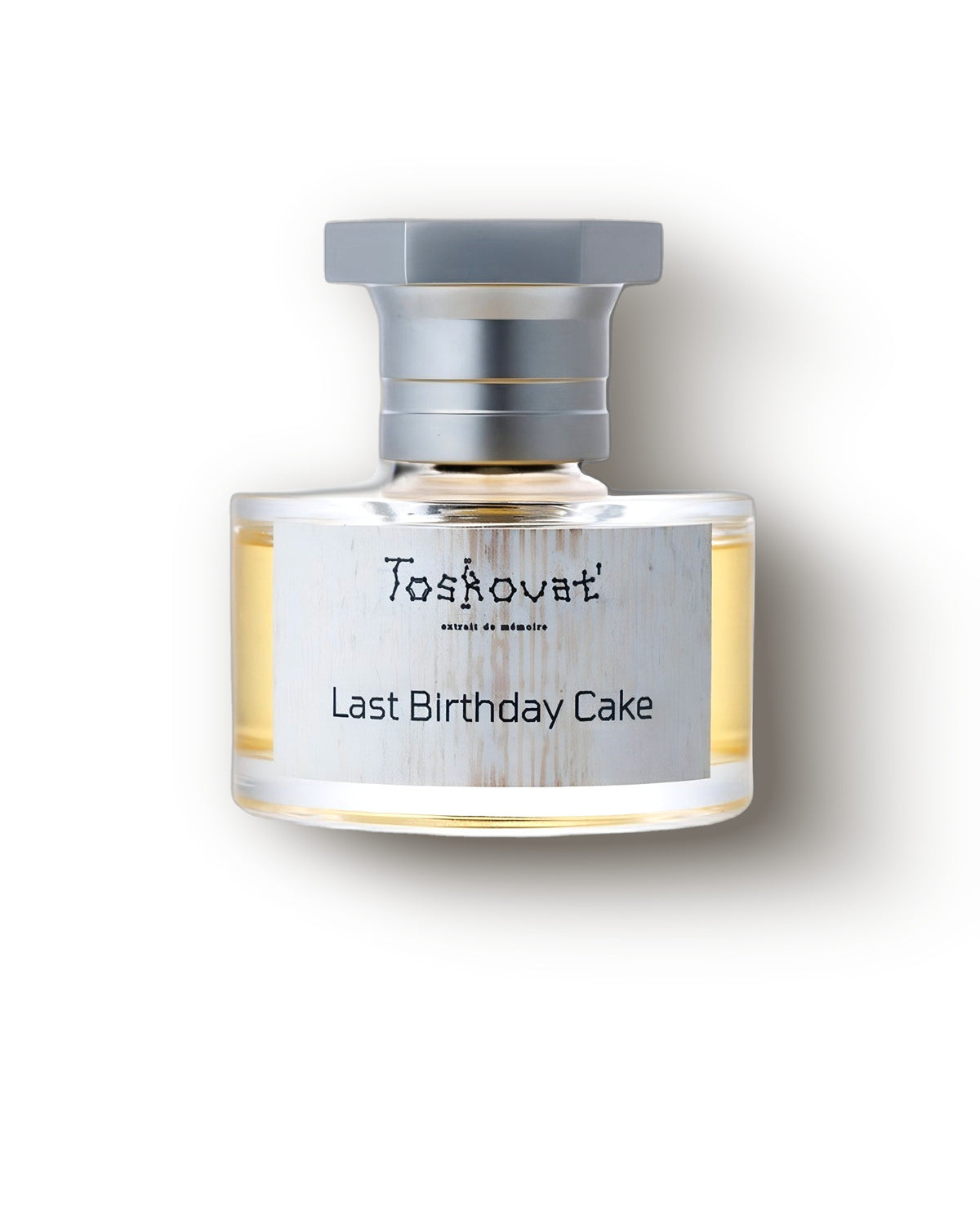
更多调香师作品Inexcusable EvilLast Birthday CakePornstar (Noyau Doux)
香氛世家

香水如短篇小说。火药、冷冽的碘与焦糖,讲述着大多数品牌绝不会付印的故事。
一款 Toskovat 就像某部电影里的一幕,而你并不确定自己本该看到它。冷冽的金属气息、烟雾、蜡,以及一种身后永远拖着阴影的美食甜味。这些是为那些希望香水能说点什么的人而作的概念性香精,其扩散力往往与创意本身的强度相称。
- 产地
- 罗马尼亚布加勒斯特
- 创立
- 2022年
- 知名于
- 概念性香精、Inexcusable Evil

Toskovat 的其他香水
您可能也喜欢