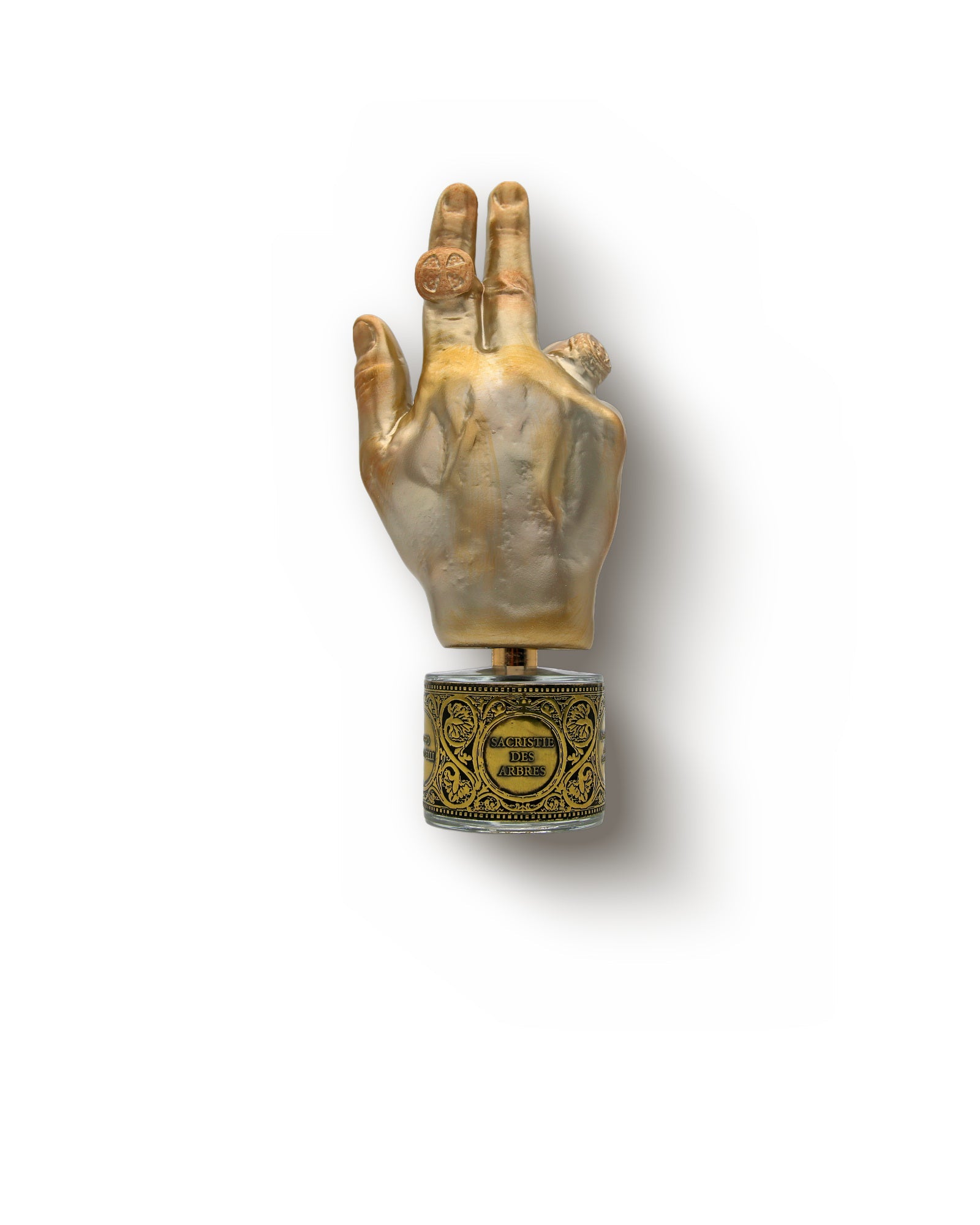
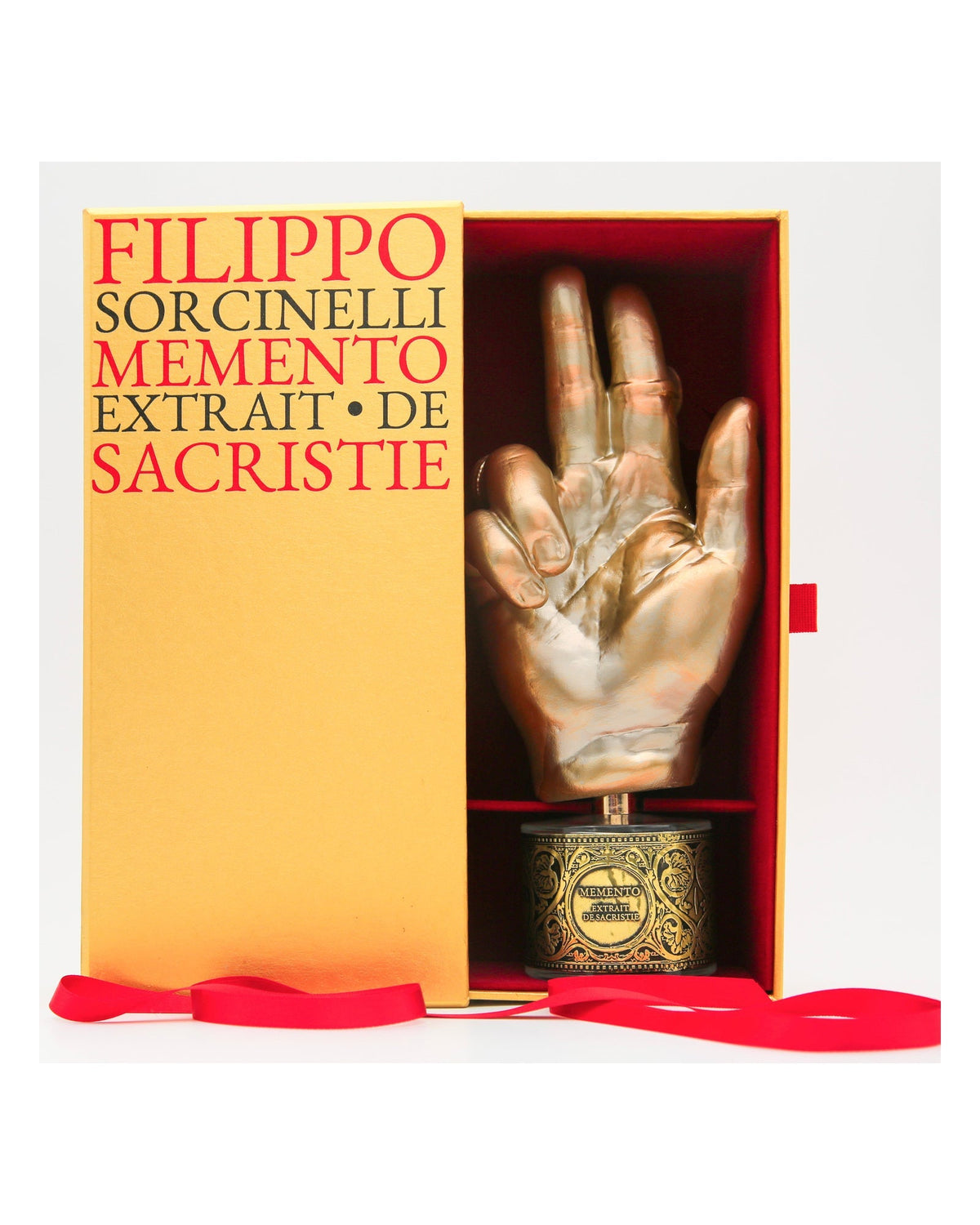
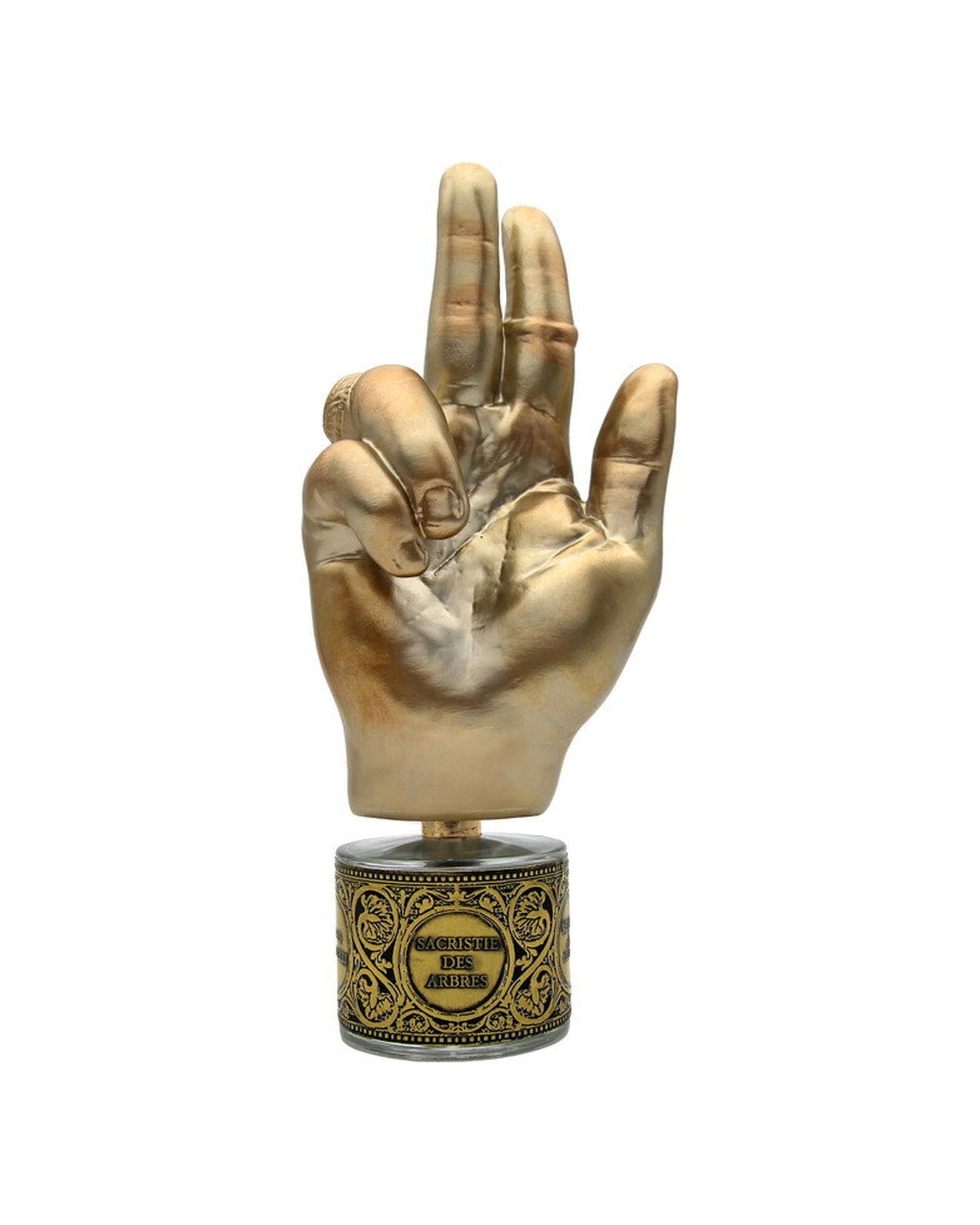
Filippo Sorcinelli
Sacristie Des Arbres
L'Histoire
MEMENTO est le mot latin que prononce le prêtre à la sacristie avant la messe, et le nom de huit extraits que Filippo Sorcinelli a lancés ensemble au salon Esxence en mars 2024. Sept renvoient à une sacristie bien réelle ; celui-ci choisit plutôt une forêt séculaire. Sorcinelli tient l'orgue lors des liturgies papales et écrit ses notes comme une fugue : sujet, contre-sujet, coda.


Ambre
Résine chauffée jusqu'à devenir sucrée
Labdanum, benjoin et vanille fondus ensemble en une matière sucrée mais sombre, comme une sève d'arbre amollie au soleil, traversée d'un fil de fumée d'encens. L'ambre ne scintille pas et n'élève pas la voix. Il reste près de la peau et diffuse sa chaleur pendant des heures.


Boisé
grain sec du bois fraîchement coupé
L'odeur des copeaux de cèdre, du santal et des racines sèches de vétiver, une chaleur poncée et résineuse au léger râpé de plumier. Ancré et posé, c'est l'épine dorsale tranquille qui rend un parfum sérieux et durable.


Aromatique
Herbes froissées dans l'air frais
La fraîcheur verte et camphrée de la lavande, du romarin, de la sauge et du thym, comme des herbes meurtries entre les doigts. Propre, vivifiante et un brin austère, elle est l'épine dorsale nette d'une fraîcheur classique de barbier.


Vanille
Gousse affinée, liquoreuse sous la crème
Des gousses affinées, pas un glaçage. La douceur a ici le moelleux d'une crème pâtissière et une profondeur balsamique, avec dessous quelque chose de sombre et d'alcoolisé, plus proche du rhum et de la fumée de bois que du sucre. Elle réchauffe tout ce qui se pose au-dessus d'elle, émousse les angles vifs et ralentit l'ensemble.


Fumé
Bois calciné et braises qui s'élèvent
L'odeur sèche et calcinée du bois qui brûle, de l'encens qui se consume et de la cendre qui s'attarde, tantôt goudronneuse, tantôt ténue et grise. Ténébreuse et chargée d'atmosphère, elle évoque un feu mourant et un courant d'air frais qui emporte son dernier souffle.


Balsamique
Sève d'arbre devenue épaisse et dorée
Des résines d'arbre et de l'ambre doré, épaissis en sirop et effleurés de vanille. Il ne scintille pas, ne bouge pas : il se pose, réchauffe la peau comme la lueur d'une bougie réchauffe une pièce, et y demeure longtemps après que les notes de tête se sont tues.


Essence de pin
Une branche de conifère brisée dans l'air froid
Ce que c'est
Des aiguilles et de jeunes rameaux distillés à la vapeur, surtout de pin sylvestre. Rien ici ne vient du tronc ni de la résine : c'est l'odeur des parties vertes, pas celle du bois.
Son odeur
Vive, verte et résineuse, avec un mordant de térébenthine et un élan camphré en tête. En dessous, une douceur de sève plus sèche, légèrement citronnée. Froide et de plein air plutôt que chaude et boisée : rien en elle ne s'installe dans le confort.
En parfumerie
Une note de tête employée pour l'élan et l'air froid du dehors : fougères, chypres, accords forestiers. Elle empêche les compositions résineuses de s'alourdir et s'accorde bien avec l'encens et le cèdre. Poussée trop loin, elle évoque le produit ménager.
Bon à savoir
L'alpha-pinène, en grande partie récupéré lors de la fabrication de la pâte à papier, est le point de départ d'une longue liste de matières synthétiques : une forêt de pins se tient derrière des odeurs qui n'évoquent jamais le pin. En s'oxydant, une vieille huile de pin devient sensibilisante.


Cèdre de Virginie
La chaleur sèche du crayon taillé, issue du genévrier rouge de l'Est
Ce que c'est
Ce n'est pas du tout un cèdre, mais un genévrier, qui pousse à l'état sauvage dans tout l'est des États-Unis. L'huile est distillée à la vapeur à partir de copeaux et de chutes de scierie, ce même bois dont on faisait autrefois les crayons à mine.
Son odeur
Doux, sec et net, plus sucré qu'on ne l'attend d'un bois, avec une pointe balsamique. Il évolue vers l'odeur d'une armoire en cèdre, plus rond et plus tendre que les huiles de l'Atlas et du Texas, plus tranchantes.
En parfumerie
Une note de fond et de cœur au rôle structurel : une ossature sèche, un poids fixateur, le socle des chypres et des fougères. On en isole le cédrol cristallin quand un parfumeur veut ce boisé net, sans l'écorce.
Bon à savoir
Sous-produit des scieries, c'est l'une des matières naturelles les plus abondantes de la parfumerie. C'est aussi le bois dont les mites ne s'approchent pas, raison pour laquelle on y taillait les coffres à linge et les revêtements d'armoire.


Encens
L'odeur de la résine qui tombe sur le charbon ardent
Ce que c'est
Ce que vous sentez, c'est un changement d'état : la résine qui rencontre la chaleur. Il s'agit le plus souvent d'oliban, que laissent perler les Boswellia d'Oman et de la Corne de l'Afrique, et les parfumeurs arrondissent l'effet avec du labdanum et du styrax.
Son odeur
Frais et sec au départ, assez vif pour évoquer la térébenthine, puis la fumée arrive : poivrée, cendrée, légèrement sucrée. Il a quelque chose d'une église de pierre, savonneux et vaguement vert, et reste près de la peau.
En parfumerie
Il agit comme le silence dans une pièce. Du cœur jusqu'au fond, il rafraîchit les floraux, aiguise les bois et donne un poids rituel aux structures orientales et chyprées qui, sans lui, paraîtraient simplement riches.
Bon à savoir
Bien avant qu'on ne la porte, cette fumée comptait parmi les importations les plus coûteuses de l'Antiquité. Elle voyageait par les routes caravanières d'Arabie jusqu'aux temples du pourtour méditerranéen, où la brûler était tout l'enjeu : le parfum était l'offrande.


Menthe
Deux menthes, l'une glacée, l'autre douce
Ce que c'est
Deux plantes, deux rôles bien distincts. La menthe poivrée renferme du menthol : elle paraît froide. La menthe verte renferme à la place de la carvone : elle paraît douce, ronde et herbacée. Toutes deux sont distillées à la vapeur à partir des feuilles et des sommités fleuries, et remplacer l'une par l'autre change tout.
Son odeur
La menthe poivrée est perçante et glacée, avec une arête camphrée qui vous dégage la tête, que vous l'ayez demandé ou non. La menthe verte est plus tendre : sucrée, légèrement fruitée, sans morsure froide. Toutes deux commencent vertes et aqueuses, puis se posent en un murmure herbacé et net.
En parfumerie
Une note de tête, et fugace : elle traverse en un éclair les fougères, les eaux de Cologne et les masculins frais, puis disparaît. La menthe poivrée se charge des ouvertures vivifiantes. Toutes deux s'accordent avec la lavande, le basilic, les agrumes et, de façon moins évidente, le chocolat.
Bon à savoir
Le menthol ne refroidit rien. Il active les récepteurs nerveux qui signalent le froid, si bien que votre cerveau perçoit du froid là où il n'y en a pas. C'est l'astuce du dentifrice et du chewing-gum, et la menthe verte en est incapable.


Rose de Damas
L'impératrice des roses, cueillie tout au long de la matinée
Ce que c'est
Dans la Vallée des roses, en Bulgarie, la cueillette commence de nuit et s'arrête vers dix heures et demie, avant que la chaleur ne monte. Ce sont les fleurs entières, et non les pétales, qui partent à l'alambic pour l'otto de rose ou à l'extraction par solvant pour l'absolu de rose.
Son odeur
Profonde et miellée, avec de la rosée et de la tige verte en tête et une chaleur poivrée en dessous. C'est ici que les deux formes divergent : l'otto est net et cireux, avec une pointe de clou de girofle, l'absolu plus sombre, plus confituré, plus proche du fruit.
En parfumerie
Elle se place au cœur et donne son corps à la composition. L'oud, le safran et le patchouli sont ses compagnons habituels, et c'est de cette alliance que naissent les roses sombres et confiturées. Elle ancre aussi bien les structures orientales que chyprées.
Bon à savoir
Il faut trois à quatre tonnes de fleurs pour un kilo d'otto de rose ; l'absolu en demande environ un septième. Les damascones identifiées dans cette fleur ont changé la parfumerie : elles évoquent la rose à des concentrations infinitésimales.
Bois de gaïac
Bois qui se consume, au cœur de rose thé
Ce que c'est
L'huile arrive à l'état solide. Le gaïac est un bois dur à croissance lente du Gran Chaco, dont le cœur broyé est distillé à la vapeur en une huile cireuse, ambrée pâle, qui se solidifie à température ambiante et doit être chauffée pour couler.
Son odeur
Chaude, fumée et balsamique, évoquant une braise incandescente plutôt qu'une flamme vive. Une douceur boisée douce porte une facette distincte de rose-thé, avec des nuances poudreuses, poivrées et légèrement goudronnées. Le fond est arrondi et discrètement crémeux, brouillant la frontière entre bois et encens délicat.
En parfumerie
Elle gagne doublement sa place dans le fond : comme parfum, et comme fixateur qui prolonge tout ce qui l'entoure. Elle arrondit les bois rugueux et les cuirs fumés, et s'associe bien à la rose, au vétiver et au tabac.
Bon à savoir
La demande a dépassé la forêt. La surexploitation a placé l'espèce sous protection internationale, si bien que les rondins, l'extrait et l'huile circulent tous sous permis. Elle continue d'être commercialisée, mais désormais comptée de près.

Vanille
Gousses d'orchidée affinées, crème anglaise et fumée légère
Ce que c'est
Les gousses vertes qui se détachent de la liane d'orchidée ne sentent presque rien. Le parfum se fabrique, il ne se trouve pas : des mois de blanchiment, d'étuvage au soleil et de séchage lent avant que la vanilline n'apparaisse. Le Mexique d'abord, Madagascar aujourd'hui.
Son odeur
La crème anglaise et le caramel d'abord, puis quelque chose de plus sombre en dessous : des fruits secs et un fil de fumée de tabac. Elle devient poudrée en séchant et reste près de la peau. Une vraie vanille affinée paraît plus profonde que la vanilline seule.
En parfumerie
Les parfumeurs s'en servent pour arrondir les angles. Tout ce qui est trop vif, trop vert, trop austère gagne en chaleur et en corps sur un fond de vanille, c'est pourquoi elle ancre tant de compositions orientales et gourmandes, aux côtés de la tonka, de l'ambre, du bois de santal et des épices.
Bon à savoir
Chaque fleur ne s'ouvre qu'un seul jour. Passé ce jour, pas de gousse : toutes sont donc pollinisées à la main, selon une technique mise au point par Edmond Albius, un garçon de douze ans réduit en esclavage à La Réunion. Aujourd'hui, l'arôme vanille est en majorité synthétique.


Vétiver
Terre fraîche et humide tirée de racines enchevêtrées
Ce que c'est
Tout ce qui compte se trouve sous terre. Le vétiver pousse comme une haute graminée tropicale, mais son parfum vit dans ses racines, un tapis fibreux et dense que l'on arrache, lave, sèche et distille à la vapeur pour obtenir une huile épaisse d'un brun ambré.
Son odeur
Terre fraîche et humide, herbe coupée sur un bois sec. L'huile d'Haïti est plus lisse, avec une légère douceur de noisette ; celle de Java est plus sombre, plus fumée, plus cuirée. Sous les deux, une pointe amère de pamplemousse et un trait vert et minéral qui tient des heures.
En parfumerie
Les parfumeurs s'en servent pour ancrer une formule, d'où sa place dans les fougères et les chypres. Les agrumes, le cuir et le tabac s'y posent volontiers. Poussé vers son versant plus cendré, il devient sévère aux côtés du cyprès et du cèdre.
Bon à savoir
Les mêmes racines qui finissent en flacon sont plantées à flanc de colline pour retenir le sol, agrippant la terre là où rien d'autre ne tient. Haïti fournit environ la moitié de l'huile de vétiver mondiale, cultivée pour l'essentiel dans de petites exploitations.


Benjoin
Baume chaud et vanillé, pleuré par un arbre incisé
Ce que c'est
Le benjoin ne coule pas de lui-même. Il faut entailler l'écorce d'un styrax, au Laos, au Vietnam ou à Sumatra, et la blessure laisse pleurer une gomme qui durcit au fil des mois en larmes rougeâtres.
Son odeur
Doux, chaud, indéniablement vanillé, avec en dessous une douceur ambrée et poudrée. Le benjoin du Siam est plus rond et plus crémeux ; celui de Sumatra, plus fumé, a un mordant de cannelle. Laissé sur la peau, il devient presque caramélisé.
En parfumerie
Une note de fond qui agit à la fois comme fixateur et comme édulcorant, donnant leur éclat aux accords ambrés et tenant en place le reste de la composition. Aux côtés du labdanum, de la fève tonka et de l'encens, elle adoucit les angles vifs.
Bon à savoir
Le mot benzène vient d'ici. Les chimistes ont nommé l'acide benzoïque d'après cette résine, et le benzène a tiré son nom de l'acide. Le nom de la résine elle-même est une expression arabe usée par le temps, luban jawi, « l'encens de Java ».

Résinoïde d'encens
La résine brute, pas l'huile distillée
Ce que c'est
Entaillez l'écorce d'un Boswellia : il pleure une sève qui durcit en larmes d'encens. Lavez ces larmes au solvant au lieu de les distiller à la vapeur, retirez le solvant, et il reste une matière épaisse, sombre, semi-solide.
Son odeur
Plus proche de la résine qui brûle que de l'huile distillée. L'élan de citron et de pin a en grande partie disparu ; reste une matière sombre, douce et balsamique, poussiéreuse et légèrement cireuse, avec la fumée de l'encensoir et une légère pointe verte et amère.
En parfumerie
C'est l'encens qui reste. Sa fraction lourde s'évapore à peine : il ancre la composition et ralentit la fuite des matières plus légères. C'est précisément pour cela que les parfumeurs le préfèrent à l'huile, aux côtés du benjoin, du labdanum et de la myrrhe.
Bon à savoir
Un arbre, deux matières. La vapeur n'entraîne que la fraction légère et laisse les acides lourds et les cires dans l'alambic. Le solvant emporte tout ce qui est soluble, y compris le plus lourd. Toute la différence est là, et c'est pourquoi les mêmes larmes sentent deux choses différentes.
Ambrette
Le seul musc qui pousse sur un arbuste
Ce que c'est
Les graines d'une mauve, cousine ébouriffée de l'hibiscus, sentent le musc avant même qu'on les travaille. Distillation à la vapeur, CO2 ou lavage au solvant pour obtenir un absolu : toutes ces voies en tirent le même musc, porté par l'ambrettolide.
Son odeur
Chaude, poudrée, et plus proche de la peau qu'aucun synthétique ne parvient tout à fait à l'être. On y trouve un fruité de poire, une douceur ambrée et noisetée, une touche d'iris. Elle s'épanouit lentement et évoque une personne plutôt qu'un parfum.
En parfumerie
Une note de fond qui agit en exaltateur : elle arrondit et soulève tout ce qui se trouve au-dessus d'elle, donnant aux floraux, à l'iris et aux gourmands un courant sous-jacent tiède comme la peau. Aucune autre matière végétale ne sent autant le musc.
Bon à savoir
Les rendements sont infimes, ce qui place l'ambrette parmi les matières les plus coûteuses de l'orgue du parfumeur. Son ambrettolide est un proche parent de la muscone, la molécule même du musc, et c'est pourquoi une graine peut tenir ce rôle.

Ambre
Un éclat résineux et chaud, composé et non récolté
Ce que c'est
L'arbre à ambre n'existe pas. Les parfumeurs composent cette odeur à partir du labdanum, la gomme collante qui suinte d'un ciste méditerranéen sous la chaleur de l'été, avec du benjoin et de la vanille. La sève fossilisée des vitrines de musée, elle, est inodore sur la peau.
Son odeur
Miellé et légèrement animal au départ, il se pose ensuite sur une chaleur dorée et poudrée : cire d'abeille, vieux tabac, cuir patiné, un fil de fumée en dessous. Il reste près de la peau plutôt que d'emplir la pièce.
En parfumerie
Il se loge dans le fond et maintient en place tout ce qui se trouve au-dessus ; c'est pourquoi les compositions orientales s'appuient tant sur lui. La vanille et le patchouli le tirent vers le sucré ; davantage de résine, d'épices et d'herbes sèches le rendent austère.
Bon à savoir
Le mot désignait autrefois l'ambre gris, la sécrétion cireuse du cachalot, et la confusion ne s'est jamais dissipée. Aujourd'hui, le métier emploie « ambre » pour deux choses : cet accord résineux, presque toujours végétal et synthétique, et les substituts de l'ambre gris comme l'Ambroxan.
Caractère Olfactif
L'ouverture est froide et résineuse : pin, menthe et cèdre de Virginie, déjà traversés d'encens. La rose de Damas et le gaïac, bois fumé et sec, réchauffent le cœur sans virer au floral. Puis tout se pose : vanille, benjoin et ambre sur vétiver et ambrette, un fond doux mais poudré plutôt que riche, l'encens liant toujours l'ensemble.


Tenue
combien de temps il reste sur la peau
Le sablier indique la tenue : le nombre d'heures pendant lesquelles le parfum continue de s'exprimer avant de s'estomper. Une barre qui quitte à peine son point de départ signifie quelques heures fugaces. Une barre qui court sur toute la longueur tient du matin jusqu'au soir. Voyez-y une valeur typique, non une promesse. Une peau grasse retient le parfum bien plus longtemps qu'une peau sèche.


Sillage
l'ampleur de sa traîne parfumée
Le mot sillage désigne d'abord la trace qu'un navire laisse sur l'eau, et c'est exactement ce que mesure cette jauge : la part du parfum qui gagne la pièce au lieu de rester sur vous. Faible, c'est un murmure que seuls les proches perçoivent. Énorme, il emplit la pièce, puis continue de l'emplir après votre départ.


Expérimental
Fait pour provoquer, pas pour plaire
Certains parfums sont faits pour plaire. Ceux-ci sont faits pour qu'on en débatte : goudron encré, caoutchouc chaud, fruit qui commence à tourner, métal et fourrure là où vous attendiez des fleurs. La pièce rayonne pour un parfum qui provoque et s'éteint pour celui qui joue la prudence, ce qui est parfois tout l'intérêt.


Bureau
Soigné, sans jamais dominer la pièce
Dans un espace partagé, le parfum est une affaire de savoir-vivre. À cette portée, il doit atteindre la personne de l'autre côté du bureau et s'arrêter là : agrumes nets, musc doux, bois pâles, le tout inspirant compétence et égards. Une pièce qui rayonne signifie que personne n'aura à en faire la remarque. Une pièce éteinte, qu'il porte loin.


Soirée
À la nuit tombée, quand il gagne en profondeur
Un dîner, un verre, la nuit qui s'étire. C'est sous une lumière tamisée que les ambres, les résines et les bois fumés cessent d'être polis, et qu'un floral opulent s'épanouit enfin. Une pièce qui rayonne signifie qu'il attend précisément cette heure-là. Une pièce éteinte, qu'il a donné le meilleur de lui-même en plein jour.


Romantique
assez proche pour être ressenti
Un parfum peut vibrer contre la peau au lieu de s'annoncer de l'autre côté de la table. Tel est le registre ici : fleurs crémeuses, vanille, musc doux, un fil d'épice, assez chaud pour inviter l'autre à se pencher vers vous. La pièce rayonne quand un parfum installe cette atmosphère et s'éteint quand il est plus pratique que séduisant.


Habillé
Une autorité tranquille parmi les tenues de soirée
Un mariage, une cérémonie, une salle où chacun a réfléchi à ses chaussures. Ce qui fonctionne ici, c'est la structure, pas le volume : bois lisses, floraux disciplinés, cuir doux. Une pièce qui rayonne signifie qu'il garde son maintien toute la soirée. Une pièce éteinte, qu'il est trop décontracté pour l'occasion.


Décontracté
confort facile des journées sans hâte
Des courses, un café, un samedi tranquille sans rien de prévu. Rien ici n'a besoin d'impressionner qui que ce soit, alors ce qui convient est doux et facile : agrumes frais, bois légers, un peu de chaleur émanant de la peau. Une pièce qui rayonne dit oui à tout cela. Une pièce éteinte signifie que le parfum réclame une soirée d'une autre envergure.


Du jour au soir
là où son humeur se pose naturellement
Une barre qui va du soleil à la lune et indique l'heure pour laquelle le parfum a été conçu. Plus elle reste dorée, plus le parfum appartient au jour et au grand air. Plus le bleu remonte vers le soleil, plus il se fait profond et chaud : le soir, la lueur des bougies, les pièces tamisées.


Hiver
chaleur qui traverse l'air froid
L'air froid assourdit un parfum et le ralentit, c'est pourquoi l'hiver appartient au dense et au chaud : résine, fumée, vanille, cuir, épices ambrées. La barre indique avec quelle force celui-ci résiste, rayonnant contre le froid au lieu de s'y étioler.


Printemps
floraisons fraîches dans une chaleur douce et montante
L'air doux et humide porte une composition légère, si bien que la saison appartient aux fleurs perlées de rosée, aux tiges vertes, à la poudre douce et aux agrumes translucides. Du vivant plutôt que du lourd. Plus le vert s'étend le long de la barre, plus celui-ci se porte avec aisance par ce temps.


Été
clair et aérien dans la vraie chaleur
La chaleur se charge de la projection à votre place, c'est pourquoi un parfum mal choisi devient insupportable dès midi. Ce qui résiste est frais et respirable : agrumes vifs, air salin, herbes aromatiques, eau. Ce qui rafraîchit au lieu d'écœurer. Une barre courte ici signifie qu'il vaut mieux le garder pour les mois plus frais.


Automne
chaleur épicée des journées qui fraîchissent
À mesure que l'air fraîchit, les matières riches cessent d'étouffer et se lisent avec netteté : bois secs, épices chaudes, tabac, ambre, fruits devenus dorés. C'est la saison où le parfum se fait contemplatif. La barre se remplit selon le naturel avec lequel celui-ci s'installe dans les journées vives qui fraîchissent.
À Porter
C'est à la lumière du jour qu'il donne le meilleur de lui-même, de l'automne à l'hiver et jusqu'aux fraîcheurs du printemps, porté par qui cherche la gravité sans le volume. Sa diffusion reste modérée : assez discret pour un bureau ou une longue marche sous les arbres nus, assez tenu pour une occasion habillée ensuite. Il tient huit à dix heures sans beaucoup changer, ce qui le rend polyvalent tout au long de la journée.
Choisir les options
L’Atmosphère


Le Nez

Filippo Sorcinelli
Fondateur et parfumeur
Organiste italien et créateur de vêtements liturgiques dont l'atelier LAVS a habillé les papes Benoît XVI, François et Léon XIV. Il a créé la ligne UNUM, et aucun parfumeur n'est nommé sur ses parfums. La ligne comprend UNUM LAVS, Opus 1144, Rosa Nigra et Ennui Noir.
La Maison

L'encens de sacristie et la pierre froide des cathédrales, transformés en extrait.
Filippo Sorcinelli construit ses parfums comme un organiste de cathédrale construit un son, lentement, avec des résines, sans crainte de l'ombre. En tant que tête pensante derrière UNUM, il travaille l'encens et la fumée, le silence des intérieurs de pierre et le poids des vêtements liturgiques, si bien qu'une composition se ressent moins comme un parfum que l'on vaporise que comme une pièce dans laquelle on entre. Le mélange lui-même est confié à un nez qui préfère rester anonyme.
- Origine
- Mondolfo, Italie
- Fondée en
- 2014
- Connue pour
- Encens liturgique, UNUM

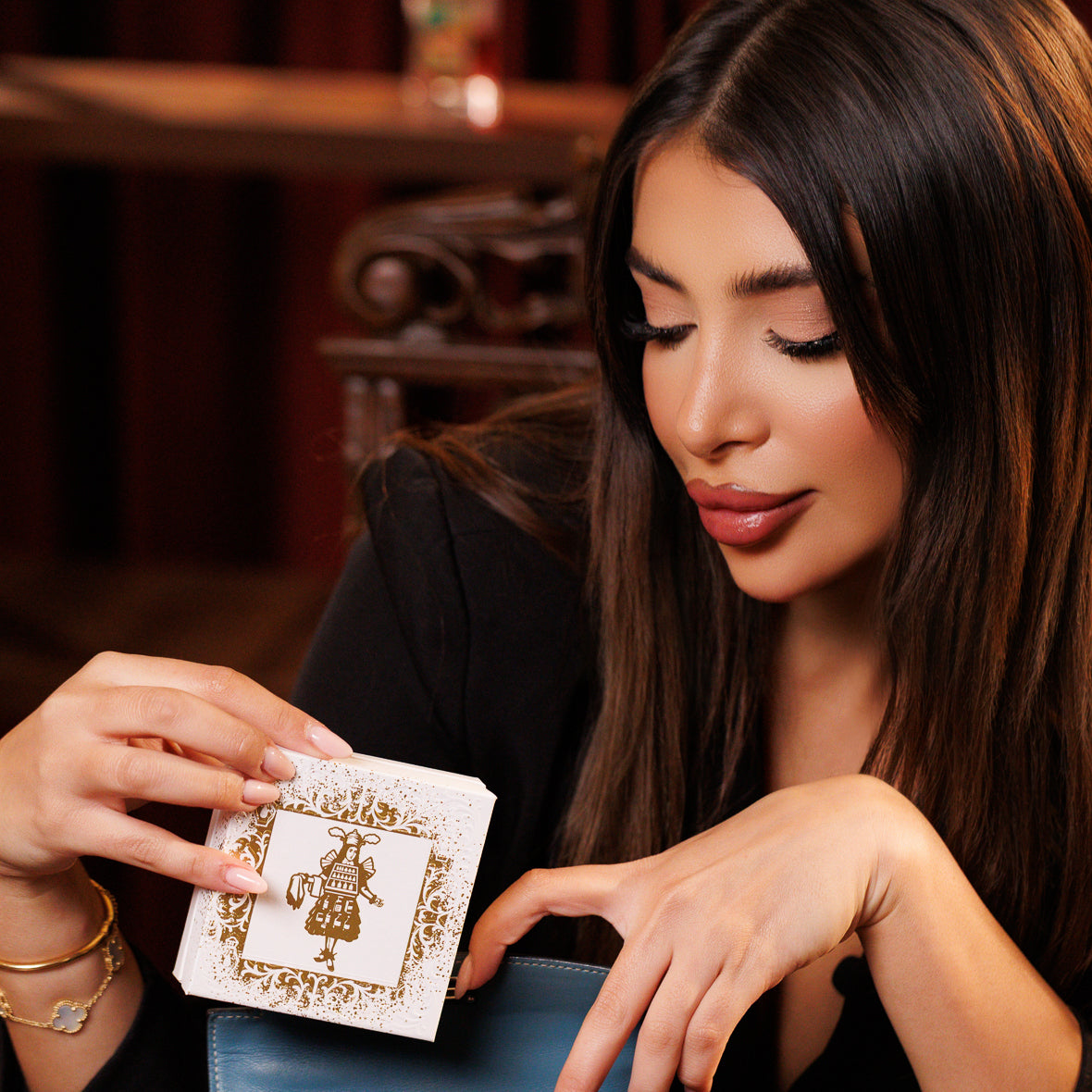
CHAQUE DÉCANT
Du flacon d'origine jusqu'à votre porte
Nous achetons le flacon d'origine au prix public, directement auprès de la maison.
Une seringue Socorex de qualité médicale prélève les millilitres exacts directement dans le flacon.
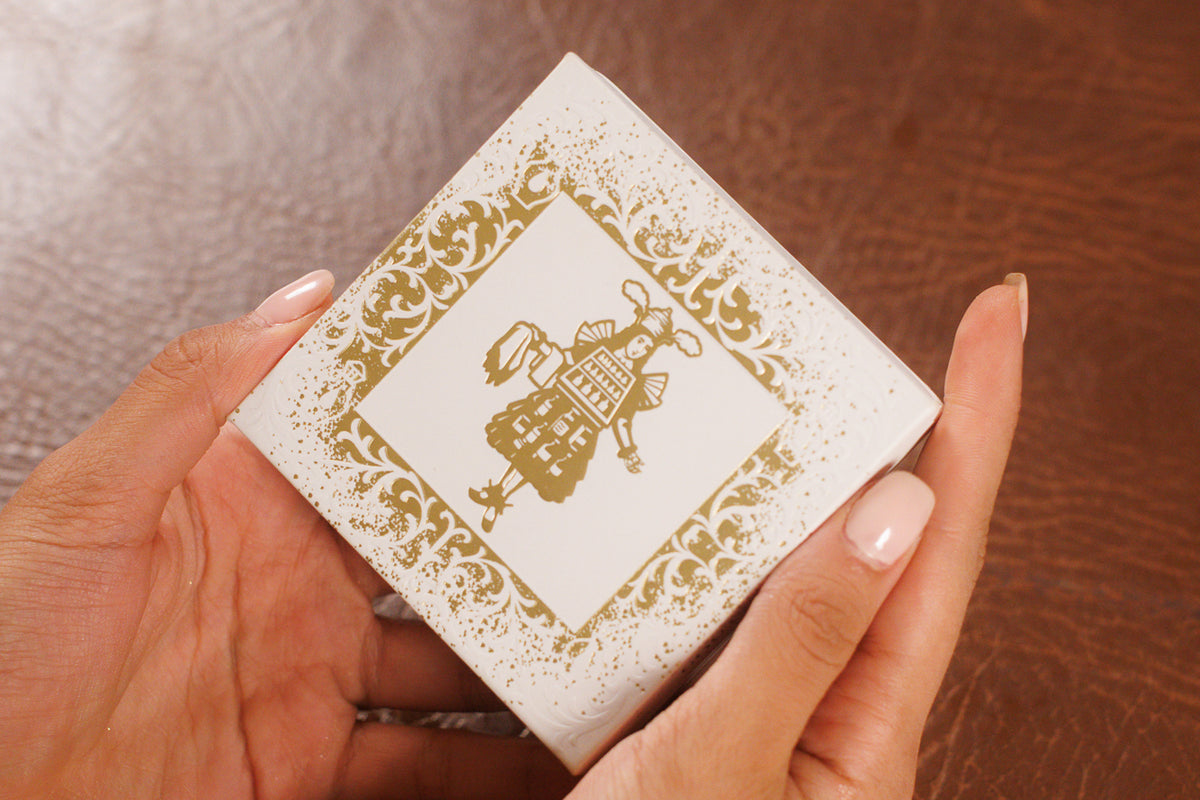
Glissé dans son coffret doré à chaud et confié à DHL, tous droits déjà réglés. Comment naît un décant
Autres parfums Filippo Sorcinelli
Vous aimerez aussi