In Koh Kong City, a man called Mr. Nhek has the only well out on the sidewalk, by his front gate. It is round, poured of cement and very deep, with a cracked plastic bucket on a rope resting on the rim. Veteran distillers told Ensar that the great Cambodian ouds could not be made without water from that well, because the minerals in the water you distil with have a spectacular effect on the oil.
Ensar is the maker behind Ensar Oud, which first sold as oriscent.com. He went east in the first place on an errand from his spiritual teacher in Amman, who paid for the plane ticket and asked for one thing, the finest oud oils in the world. He also came back with a question: where does an oil actually begin? An empty tank at Mr. Nhek's gate is one of the places that question leads.
What he went looking for
He met oud at Sufi gatherings, where small stalls sold little vials of oil under that name. Most were nameless oils from nameless sources. The smell had its appeal anyway.
The trade he walked into ran on a map: the same oils changing hands between brokers who had never set foot near a tree. He left the map and followed the wood itself, into forests in Burma, Borneo, Thailand, Vietnam and Cambodia. Everyone else cared who supplied an oil. He cared where it began, which in practice means a specific tree, a specific soil, a specific distillation, and even the water used on the wood.
By 2011 the house had its own still inside the distilleries it worked with, every batch kept apart so he could study what each factor had done to it. He runs a distillation as though he will keep the oil and smell it for the rest of his life.
Getting the water across the border
He wanted the old Cambodian ouds back, which meant getting every detail right, water included. The distillery is in Thailand, about an hour's drive from the Cambodian border. Water is one factor out of a dozen, a ridiculous amount of trouble over one twelfth of anything. They took it anyway.
So the water came over in a blue tank holding close to a ton of red-brown liquid, over many trips, past two customs clearances and four police checkpoints on the way back. "It's just water" was never quite explanation enough.
In the oud business you cannot trust anybody, not even to fill a tank of water. Leave it to somebody else and the tank comes back off the nearest tap. You have to be there and watch it happen.
In the oud business you cannot trust anybody, not even to fill a tank of water.
Three years of asking for one tree
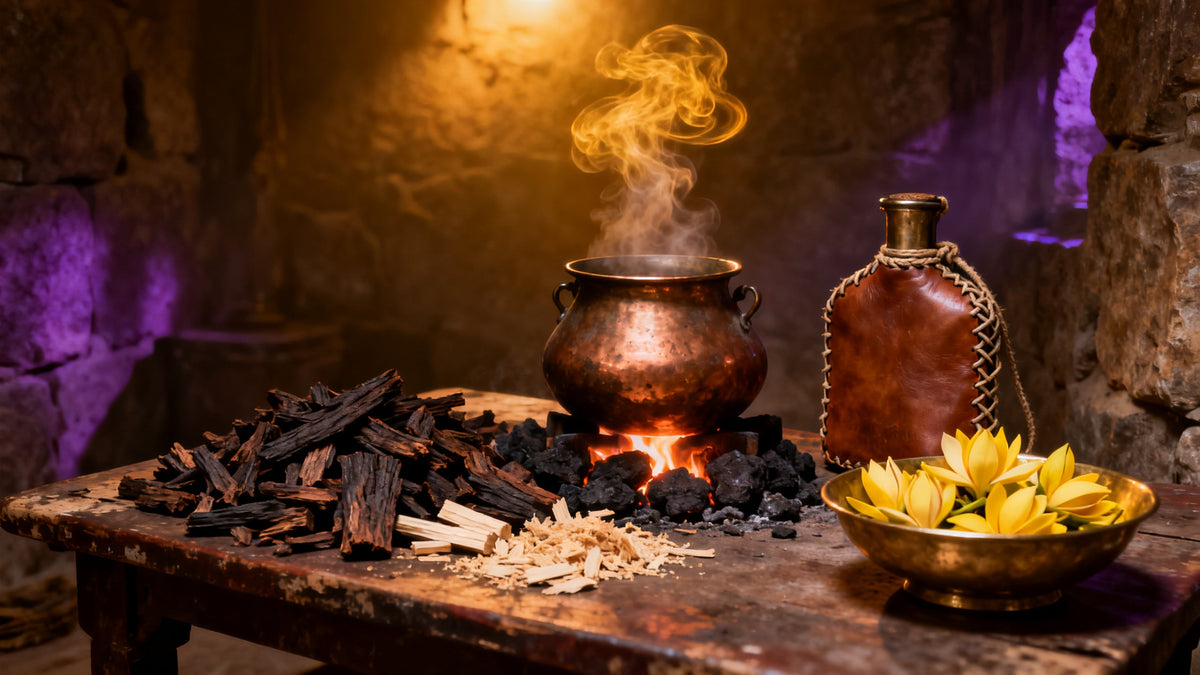
The hardest, most resinous agarwood is burned. Chips of it go on a burner a sliver at a time, and that is the only thing anybody would ever do with wood of that grade. Oil comes from the inner wood.
Ensar demanded the incense grade go into the still instead, and many distillers thought he was playing a practical joke. For one oil he spent three years asking a distiller for logs from a tree that was over a hundred years old when it was cut, and when they came they were his to chop up and never see again. Everybody in the oud-producing world, he writes, calls that pure insanity.
The smell he is after normally lasts seconds. Put a sliver of green kyara on a burner and it arrives and is gone. He wanted it without the smoke and holding for hours, what the old masters called the green dragon's breath. If nobody put incense wood in a still, an oil like Kyara de Kalbar would not exist.
Kyara de Kalbar the perfume is built on that oil, the one he calls his calling card, and it contains it. The oil is moist forest air, soaked earth after rain and fresh-cut agarwood that is still wet, with a cool minty glint cutting through every so often. In the perfume all of it settles into a deep resinous glow with no smoke in it at all.
A perfume that waits for a flower
Blue lotus keeps its own hours. It opens with sunlight, closes by afternoon and starts losing its scent almost the moment it is cut, so there is no ordering some and waiting for it to arrive. Ensar went looking for it in person, across the Thai countryside.
The struggle to find that lotus again was the main reason Blue Kalbar went on a long hiatus. When the flower will not cooperate, neither can he. At the heart of the perfume is the buttery warmth of blue lotus, creamy, close enough to the skin to be mistaken for it.
The picture inside Mongolian Musk
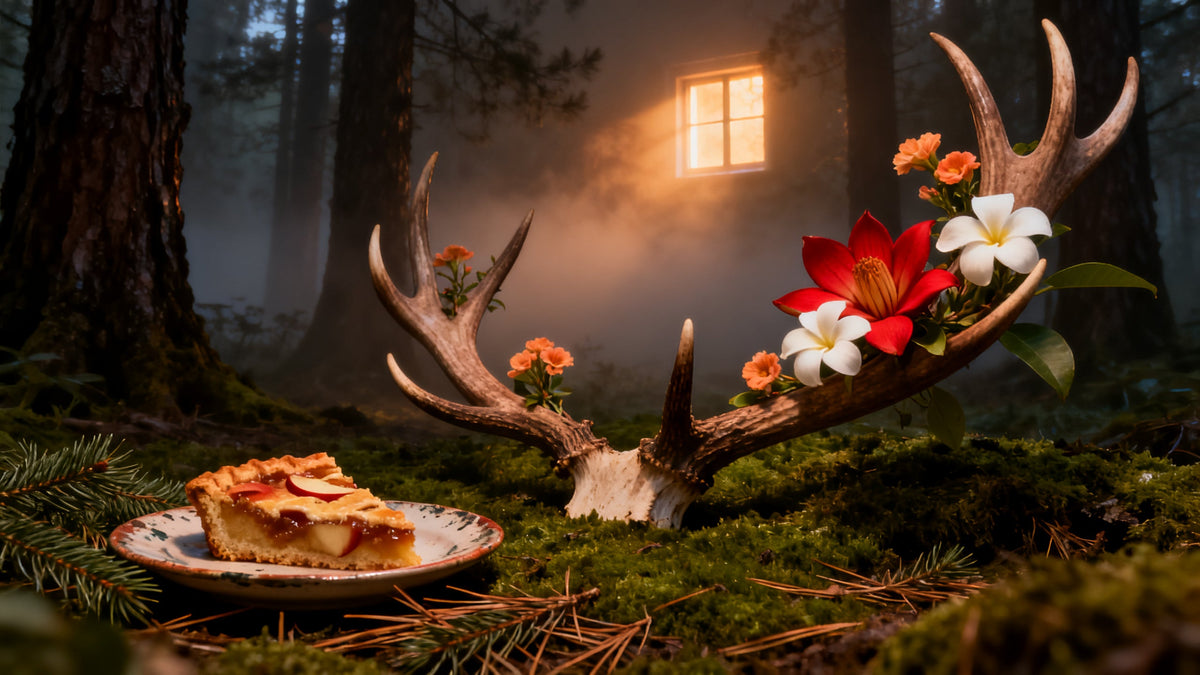
Mongolian Musk is built on deer musk, one of the few materials as scarce as the oud beside it. Behind the perfume is a simple scene: a deer under a tree on an early autumn day, fermented pu-erh sweetened with honey and spiced with cinnamon. The musk comes up underneath all of that, raw and animal, a body-warm smell of skin and fur.
Hundreds of trees, then a video
Oud Yusuf, another of his oils, came out of a plot where the farmer chiselled resin off his trees and left them standing. For years the grove held hundreds of them. The house went back one day with a colleague who had just joined, and he did not get to see a single tree.
The farmer had cut all of them, because he had to, to stay in business. Many were over forty years old and still growing. What survives is a video of a magical place that once was. Years later, the man behind Oud Yusuf owned several hectares of durian trees. Musk Yusuf, the perfume built on that oil, is sold out at this writing.
Some of what is in these bottles is older than the person wearing it, made from materials that cannot always be replaced simply because there is demand for more. What ends up on you is something you will not smell twice.
All of it is easier to smell than to summarise. Ensar Oud decants at Gouttes Rares start at 1 ml, and the Ensar Oud buying guide goes through them one at a time.
Frequently asked questions
Who is behind Ensar Oud?
A maker known simply as Ensar. He met oud at Sufi gatherings, where stalls sold little vials of oil from nameless sources, and later moved to Amman to live near his spiritual teacher, who sent him to the Far East to bring back the finest oud oils in the world and paid for the ticket. The house first sold as oriscent.com.
What does Ensar Oud smell like?
It changes from perfume to perfume, because each one is built around a particular oil. Kyara de Kalbar settles into a deep resinous glow with no smoke in it. Blue Kalbar is buttery blue lotus lying close to the skin, creamy and quiet. Mongolian Musk is raw animal warmth over fermented pu-erh, honey and cinnamon.
What is the green dragon's breath?
It is the old masters' name for the smell a sliver of green kyara gives off on a burner, which lasts only a few seconds. Distilling incense-grade wood so that smell holds for hours on skin is the obsession behind oils like Kyara de Kalbar.
Is Ensar Oud natural?
For its oud oils the house offers twice your money back if verified laboratory findings locate even one molecule of synthetic material. The note pyramids for Kyara de Kalbar and Blue Kalbar are composed entirely from natural materials.
Where can I try Ensar Oud?
Gouttes Rares carries Ensar Oud decants in 1, 2, 5 and 10 ml. The Ensar Oud buying guide goes through the house one perfume at a time if you want help choosing.
 From the decanting room
Every guide here ends in a 2 ml decant.
Browse the discovery sets · $58+
From the decanting room
Every guide here ends in a 2 ml decant.
Browse the discovery sets · $58+