Zoologist
Penguin
The Story
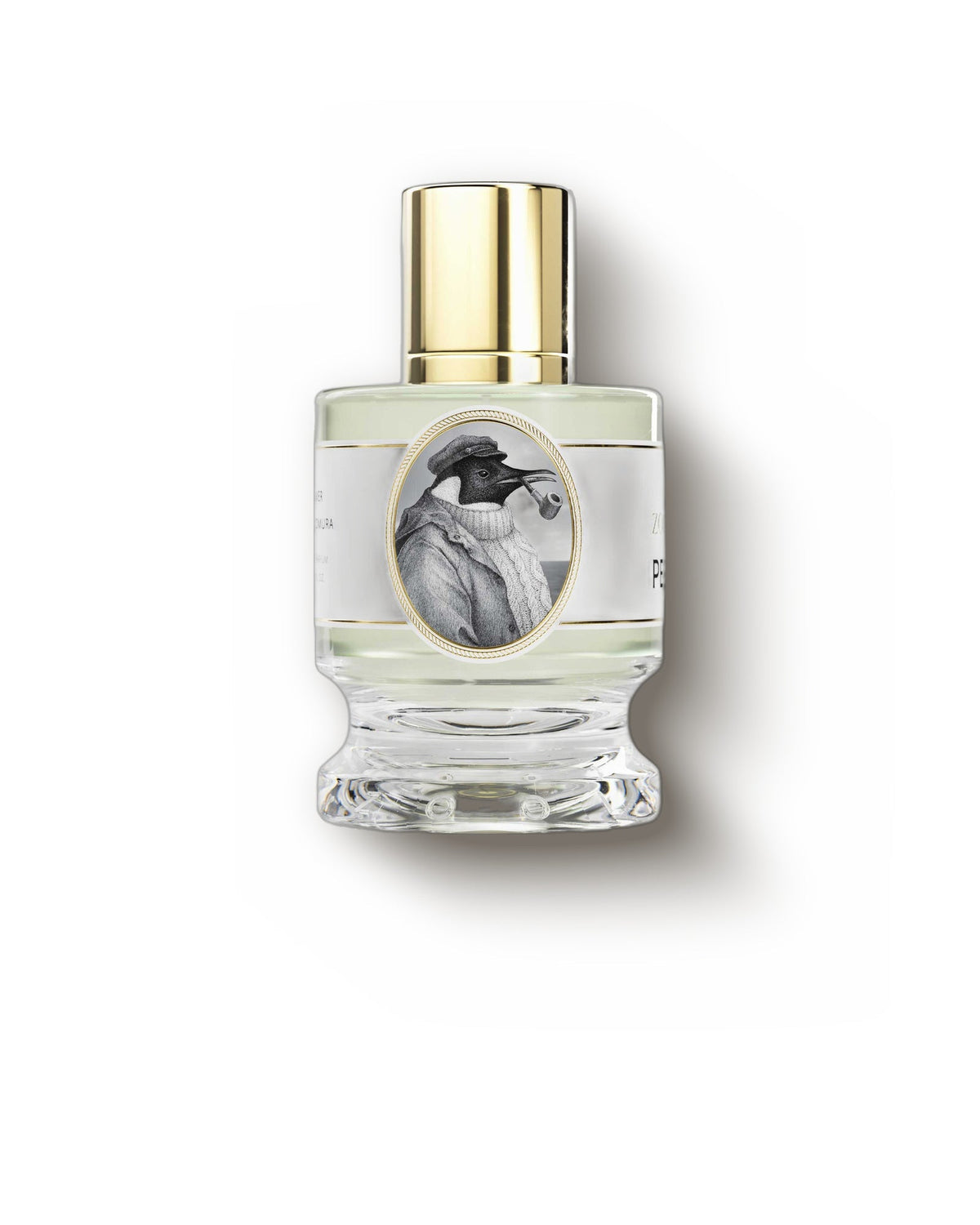
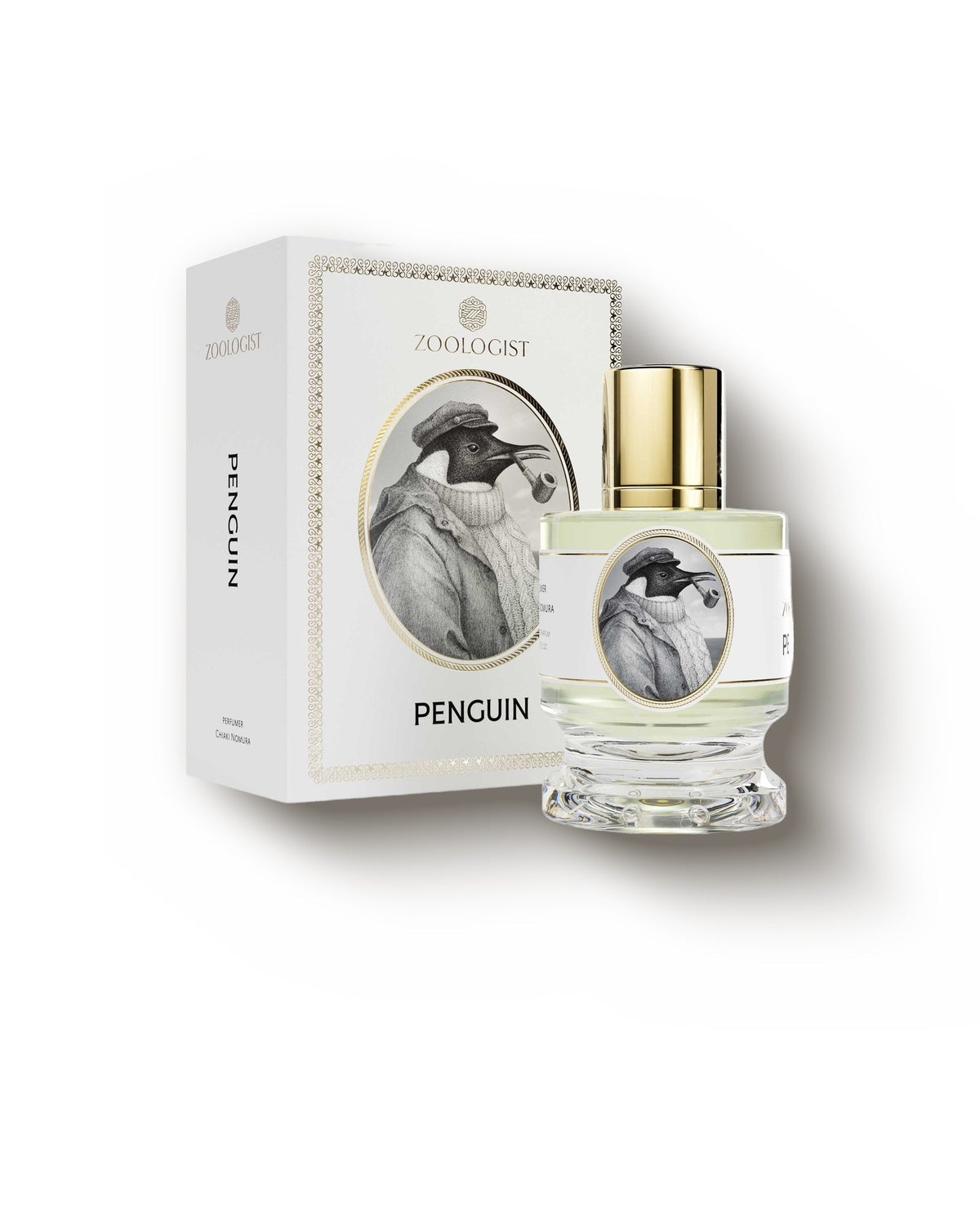
Penguin is Zoologist's emperor colony bowing to an Antarctic cyclone, the father guarding the egg in the huddle while the mother makes the long trek to the sea for food. Chiaki Nomura composed it at 20% concentration, and its signature is a hard contrast: icy, salty sea air over warm suede.


Ozonic
the air before a storm
A clean, airy transparency like the charged sky just before rain or sheets billowing on a line. Crisp and almost electric, it suggests altitude and open windows, weightless and modern, the smell of pure breathable space rather than any single thing.


Fresh
Cold water, open air, washed skin
Cool water, laundered cotton, air with nothing in it yet. The lift can go citrus-zesty or salt-aquatic, but the effect is the same either way: it registers as clean rather than as a scent, the way a room reads different five minutes after you open a window.


Musky
Warm breath of clean skin
A soft, slightly animalic warmth that smells like clean skin and freshly dried laundry, intimate and faintly sweet. It hums quietly underneath a fragrance, a second skin that only registers when someone is already standing close enough to catch it.


Leather
A jacket with some miles on it
Tanned hide and birch tar, dry, smoky, a bitter rasp and tobacco under it. Sometimes new and lacquered, like a car interior; sometimes worn soft, like suede gloves gone thin. Either way, it smells used.


Salty
mineral brine on bare skin
A mineral, briny tang that reads like sun-warmed skin after a swim or the crust of dried sea spray. It adds a moreish, almost edible savoriness, intimate and bare, hovering between flesh and ocean.


Fresh Spicy
Cool bite of cracked pepper
Pink pepper, cardamom and ginger, spice that prickles rather than warms. It fizzes near the top of a fragrance, dry and faceted, closer to crushed peppercorns and a split cardamom pod than to anything simmering in a kitchen. Bright, never comforting.


Woody
Dry grain of cut timber
The smell of cedar shavings, sandalwood, and dry vetiver roots, a sanded, resinous warmth with a faint pencil-box rasp. It feels grounded and composed, the quiet backbone that makes a scent read as serious and lasting.


Antarctic Air
Cold clean air, the scent of absence
What it is
Frozen water is very nearly odourless, so this one is invented outright: cold metallic aldehydes, airy molecules such as dihydromyrcenol, a drop of ozonic Calone, transparent white musks. Air, assembled.
How it smells
Sharp, mineral and deliberately near-empty. Cold air, a faint metallic prickle, damp stone, a watery transparency. It registers as a sensation rather than a scent, sometimes brushed with sweetness from the musk beneath.
In perfumery
It opens a fragrance with coldness and space instead of with a smell, pairing with juniper, mint, iris, pine and aquatic notes. Glacial niche releases and frosted winter compositions run on it.
Good to know
The trick is subtraction. A snow accord is defined by what the perfumer leaves out, warmth, sweetness, anything organic, as much as by the handful of molecules put in. Emptiness turns out to be difficult to build.


Ice Accord
A clean cold breath of frozen mineral air
What it is
Frozen water has no smell, so Ice has to be faked. Perfumers reach for cooling molecules, ozonic and aquatic materials and a hard mineral edge, and between them they persuade the nose that something is cold.
How it smells
Crisp and transparent, like the first sharp breath outdoors on a frosty morning. Slightly metallic, wet stone, a faint ozone sparkle. No sweetness, no warmth: the whole effect is clarity and space.
In perfumery
Ice lives at the top, an airy lift that opens a composition rather than filling it. It sits beside mint, citrus, juniper, marine and metallic accords, and it defines the frozen and aquatic genre outright.
Good to know
The chill is a nerve trick. These molecules work on skin the way menthol does, so the nerves report cold while the temperature never moves. Ice sells atmosphere: glaciers, winter air, nothing that was ever harvested.


Juniper Berry
Resinous blue cones that breathe gin and pine
What it is
It is not a berry. Juniper's blue-black beads are cones on an evergreen, and they ripen over two or three years, green and ripe sharing one branch. Dried and steam-distilled, they give the oil that flavors gin.
How it smells
Crisp and dry: green needles, cracked pepper and a cold turpentine bite over something balsamic. The opening is gin in a glass, almost minty, before it settles into woody, camphorous resin with a faint sappy sweetness underneath.
In perfumery
A top-to-heart note that cools a blend down. Fougeres, chypres and aromatic colognes lean on it for herbal snap, usually alongside lavender, vetiver, cardamom and citrus, where it keeps the sweetness dry and the opening bracing.
Good to know
Only the female bushes bear cones, so half of any stand is no use to a picker. Long before gin, juniper branches were burned as a fumigant in plague-era hospitals and sickrooms, trusted to clean the air.


Pink Pepper
Bright rosy berries with a spice fizz
What it is
It is not pepper. The rose-colored berries come from a South American tree with no botanical link to the pepper vine at all, dried and then steam-distilled or extracted with CO2.
How it smells
Rosier and fruitier than black pepper, with only a prickle of heat. Crushed berries, a juniper-ish resin, a flick of citrus. It flashes on the opening and is gone quickly, leaving a gentle warm spiciness behind.
In perfumery
Perfumers reach for it when a composition needs spice without heat. It puts a rosy fizz over florals, freshens woods and ambers, and sits well with bergamot and patchouli. The fizz is a signature of the modern fruity-floral.
Good to know
The family it actually belongs to is the cashews, close enough that people who react to cashew or mango sometimes react to these berries too. Worth knowing before you cook with them.


Saffron
Crimson threads breathing leather, honey and dry hay
What it is
Three crimson threads sit inside each autumn crocus flower, and a hand pulls every one. Dried, those stigmas are steeped into a tincture or extracted into an absolute. That is the entire supply chain.
How it smells
Hay and honey and warm toast first, then something metallic and leathery underneath, the work of a molecule called safranal. It dries down into suede, tobacco and dusty amber, bitter at the edges.
In perfumery
It lives in the heart, glowing reddish, the hinge between spice and leather. Perfumers wed it to rose so often the pairing became a genre, and entire leather accords get built on it alone.
Good to know
A kilogram of saffron costs about 150,000 hand-picked flowers and many days of stooped labor, which is why almost none of it reaches perfume. Most saffron notes are built from synthetic safranal instead.


Ciste Absolute
Sun-baked Mediterranean shrub that bleeds amber resin
What it is
Cistus, the rockrose, survives dry Mediterranean hillsides by sweating a sticky brown resin across its leaves and stems. The resin is labdanum, boiled out of the cut branches or lifted with solvent.
How it smells
Warm, dark and balsamic around a leathery amber core. It opens green and medicinal, then settles into resinous sweetness laced with honey, dried fruit and a faint muskiness. The drydown recalls ambergris, tobacco and old polished wood.
In perfumery
Most amber accords are built on it. Labdanum fixes a composition and gives chypres and orientals their leather-and-resin backbone, sitting under oakmoss, patchouli and bergamot long after the citrus has burned off.
Good to know
Cretan and Cypriot shepherds gathered labdanum by combing it from the beards and thighs of goats that had browsed through the sticky shrubs. Some scholars call it the onycha of the biblical holy incense.


Sandalwood
Creamy wood, pulled up by the roots
What it is
The richest oil sits in the roots, so the whole tree is pulled up and steam-distilled rather than felled. Mysore in southern India was the classic source, until decades of overcutting pushed the wild trees to the edge.
How it smells
Milk and warm wood, with a rosy, almost buttery edge and nothing sharp at all. What surprises people is how little it moves: no bright opening, no dry-down drama, just the same quiet glow for hours.
In perfumery
It works twice over: as a smell, and as a fixative that holds rose or jasmine in place. Sandalwood is also graded, and the darkest, densest, most resin-heavy old heartwood carries its own name: red meat.
Good to know
A heart worth taking takes about thirty years to form. Plantations of the same species in Western Australia now supply most of the world's oil, close to the old Mysore chemistry if not quite its creaminess.


Musks
One word for two entirely different materials
What it is
Two things answer to the name. A family of synthetic musks, built to carry warmth and softness, does most of the work in perfumery today. Deer musk is the older road, and traditional attar work still runs on it.
How it smells
Deer musk is animalic and heavy up close, and turns warm, sweet and radiantly skin-like the moment it is diluted to a whisper. The synthetics run cleaner: hot-ironed linen, warm cotton, skin rather than fur.
In perfumery
Musk is the floor a composition stands on: it fixes what sits above, stretches the wear and adds that second-skin glow. A lychee or a rose often has one underneath, holding the fruit in place long after it should have faded.
Good to know
One bottle can smell radiant on you and like almost nothing on the next person. A large number of people cannot smell certain synthetic musks at all, a quirk called specific anosmia.


Seamoss
Green tidewrack breathing iodine and salt
What it is
Kelp and other coastal algae, dried and solvent-extracted into an absolute so dark and thick it looks closer to tar than to a perfume material. Synthetic marine molecules usually ride alongside to round out the brine.
How it smells
Green, salty and iodine-rich, all wet rock and low tide, with a faint marine funk that dries down leathery and a little smoky. Not the clean aquatic blue. This is the shoreline laid bare at ebb tide.
In perfumery
It gives coastal accords the iodine bite and dark green depth that clean aquatic molecules cannot fake, holding from heart to base. Salt, vetiver, ambergris and incense keep it from collapsing into pure low tide.
Good to know
The absolute is scarce and so tenacious that a trace counts as a dose. The same algae chemistry behind kombu broth and nori sheets gives it that savoury umami edge, the sea made wearable.


Suede
Soft brushed leather without the tannery bite
What it is
The napped underside of a tanned hide barely smells of anything, which is the joke at the centre of this note. Perfumers build the impression instead, from soft musks, ionones and gentle leather molecules like Suederal and safraleine.
How it smells
Dry, powdery and soft, like the inside of a good glove. Where birch-tar leather shouts, this murmurs: a little almond, a little violet, warm skin underneath. It starts smooth and ends up sitting very close to you.
In perfumery
Base note, and the cushion the rest of a formula sits on. It takes the tannery out of leather, sands the edge off a wood, and gives iris, violet and amber somewhere soft to land.
Good to know
Suede takes its name from gants de Suede, gloves of Sweden, where the soft napped finish caught on. The French kept the country and dropped the glove, and perfumery kept the feel and dropped the leather entirely.
Fragrance Character
It opens cold and bright: Antarctic air and the ice accord, sharpened by juniper berry and a trace of salt. Pink pepper and saffron keep the heart lively while ciste absolute adds a faint resinous warmth. As the chill lifts, seamoss and musks settle onto suede and sandalwood, a soft, saffron-tinted leather that holds a moderate, steady trail.


Longevity
how long it stays on skin
The hourglass reads wear time: how many hours the fragrance keeps speaking before it fades. A bar that barely leaves the start means a few fleeting hours. One that runs the full length carries from morning into evening. Treat it as typical, not promised. Oily skin holds scent far longer than dry.


Sillage
the size of its scent trail
Sillage is French for a ship's wake, and that is exactly what this measures: how much of the scent reaches the room instead of staying on you. Low is a whisper only close friends catch. Enormous fills the room, then keeps filling it after you leave.


Experimental
Built to provoke, not to please
Some perfumes are made to be liked. These are made to be argued about: inky tar, hot rubber, fruit on the turn, metal and fur where you expected flowers. The coin glows for a scent that provokes and dims for one that plays it safe, which is sometimes the point.


Office
Polished, and never louder than the room
Scent is manners in a shared room. At this range it should reach the person across the desk and stop there: tidy citrus, soft musk, pale woods, all of it reading competent and considerate. A glowing coin means nobody has to mention it. A dim one means it travels.


Evening
After dark, when it deepens
Dinner, drinks, the night that runs long. Low light is where ambers, resins and smoky woods stop being polite, and where a plush floral finally blooms. A glowing coin means it is waiting for exactly this hour. A dim one means it did its best work in daylight.


Romantic
Close enough to be felt
A fragrance can hum against skin instead of announcing itself across a table. That is the register here: creamy florals, vanilla, soft musk, a thread of spice, warm enough to make someone lean in. The coin glows when a scent sets that mood and dims when it is more practical than seductive.


Formal
Quiet authority in a dressed-up room
A wedding, a ceremony, a room where everyone has thought about their shoes. What works here is structure, not volume: smooth woods, disciplined florals, soft leather. A glowing coin means it holds its posture all evening. A dim one means it is too casual for the room.


Casual
Easy comfort for unhurried days
Errands, coffee, a slow Saturday with nowhere to be. Nothing here has to impress anyone, so the fit is soft and easy: fresh citrus, light woods, a little warmth off the skin. A glowing coin says yes to all that. A dim one means the fragrance is asking for a bigger night.


Day to Night
where its mood naturally falls
A bar running from sun to moon, reading the hour the fragrance was made for. The more of it that stays gold, the more the scent belongs to daylight and open air. The further the blue reaches back toward the sun, the deeper and warmer it turns: evening, candlelight, low rooms.


Winter
Warmth that carries through cold air
Cold air mutes a fragrance and slows it down, which is why winter belongs to the dense and the warm: resin, smoke, vanilla, leather, ambered spice. The bar reads how well this one pushes back, glowing against the chill instead of thinning out in it.


Spring
Fresh blooms in mild, rising warmth
Mild, humid air lifts a light composition, so the season belongs to dewy florals, green stems, soft powder and citrus you can see through. Alive rather than heavy. The further the green runs along the bar, the more comfortably this one wears in that weather.


Summer
Bright and airy in real heat
Heat does the projecting for you, which is why the wrong perfume turns unbearable by noon. What survives is cool and breathable: sharp citrus, salt air, aromatic herbs, water. Things that refresh instead of cloy. A short bar here means save it for cooler months.


Fall
Spiced warmth for cooling days
As the air cools, the rich materials stop smothering and start reading clearly: dry woods, warm spice, tobacco, amber, fruit gone golden. It is the season perfume turns contemplative. The bar fills according to how naturally this one settles into crisp, cooling days.
Best Worn
Best on cold, clear days in winter and early spring, from a morning walk to a day at the office, for anyone who wants freshness with some suede and spice beneath it.
Seçenekleri belirleyin
Atmosfer


Burun
Chiaki Nomura
Perfumer
Chiaki Nomura is a Japanese perfumer at IFF in New York. She studied pharmacy in Tokyo, then took a master's in cosmetics and fragrances at ISIPCA in Versailles and the University of Plymouth. Her work includes Vince Camuto Fiori, Scents of Wood Hinoki in Hinoki and Zoologist Penguin.
Maison

Ekstre halinde bir hayvan bestiyeri. Evcilleştirilmemiş hayvanların medeni dozları.
Zoologist parfüm yapmaktan çok yaratık yaratıyor. Her çıkış, bağımsız ya da büyük koku şirketlerinden birinde çalışan bir parfümöre emanet edilen tek bir hayvanın portresi ve parfümörden korkusuz olması isteniyor. Sonuçlar genelde bir odayı en iyi şekilde ikiye bölüyor. Bunlar hava durumu ve ruh hali taşıyan kokular, arka plan değil bir hikaye olarak taşınıyor.
- Köken
- Toronto, Kanada
- Kuruluş
- 2013
- Bilinen ürünleri
- Squid, Tyrannosaurus Rex

Zoologist evinden diğer parfümler
Bunlar da ilginizi çekebilir